
The OSHA Requirements That Surface the Moment a Job Starts
A Practical Look at OSHA’s “Training Before Exposure” Expectation
Craig Powers
6/12/20265 min read
The OSHA Requirements That Surface the Moment a Job Starts
A Practical Look at OSHA’s “Training Before Exposure” Expectation
By Craig Powers, Large Loss Specialist, Safety, OSHA Compliance & Technical Trainer
Most restoration and remediation contractors believe they’re compliant until a job site forces four different OSHA standards into play at the same time. It happens faster than we realize. A crew walks into a water loss, a fire cleanup, or a mold remediation project, and before the first tool is lifted, the work environment has already activated asbestos awareness, bloodborne pathogen awareness, silica awareness, and hazard communication requirements.
These are not obscure, rarely used standards. They’re the ones that show up on everyday projects, and OSHA’s expectations are clear: “Employees who may be exposed must receive training prior to or at the time of initial assignment.” That single sentence appears across multiple standards, and it’s the part many companies overlook.
In my work with restoration companies, I see the same pattern repeatedly. Teams move quickly. Schedules tighten. Jobs overlap. And somewhere in that rush, training gets treated as something that can be “caught up later.” OSHA doesn’t see it that way. If the hazard exists on day one, the training requirement exists on day one.
I want to focus on four of the most common OSHA training triggers in restoration work. It is not a complete list of OSHA-required programs, and individual state-plan OSHA jurisdictions may impose additional or stricter requirements. But these four standards show up consistently in our industry that every contractor, owner, project manager, estimator, and field supervisor should have a clear, defensible plan for them.
"If the hazard exists on day one, the training requirement exists on day one."
Asbestos Awareness (29 CFR 1926.1101)
Asbestos in my opinion remains one of the most misunderstood hazards in the restoration world. Age alone does not determine whether a material contains asbestos, and appearance never does. If a project involves disturbing suspect building materials like flooring, drywall, plaster, mastics, insulation, ceiling systems, roofing, or anything else that could reasonably contain asbestos, workers fall under the asbestos standard.
OSHA’s training requirement is unambiguous: “Employees who may be exposed must receive training prior to or at the time of initial assignment and at least annually thereafter.”
For restoration contractors, that means training cannot wait until after demo begins. If a crew is going to cut, remove, break, or disturb suspect materials, they must already understand what asbestos is, where it’s found, and why sampling must occur before disturbance.
Documentation should show that training is current, that it matches the type of work employees perform, and that the company has a process for identifying suspect materials before they’re touched. This is a planning issue, not a paperwork issue.
“Employees who may be exposed must receive training prior to or at the time of initial assignment and at least annually thereafter.” 29 CFR 1926.1101
Common Misconceptions
· “Structure was built after 1989 so we don’t need to do testing before we disturb the materials."
· “I have taken the asbestos awareness course several years ago, I don’t need to take it again."
· “The flooring/drywall looks fine, so it doesn’t need testing before we cut into it."
All incorrect.
Bloodborne Pathogen Awareness (29 CFR 1910.1030)
Bloodborne pathogens are not limited to medical environments. Restoration and cleaning technicians encounter potential exposure in sewage backups, trauma scenes, hoarding conditions, contaminated contents, and any situation involving blood or other potentially infectious materials.
OSHA ties the requirement to reasonably anticipated occupational exposure, not job titles. If the work could involve contact with blood or OPIM, the standard applies.
Training must occur “at the time of initial assignment” and annually thereafter, and it must be updated whenever new tasks or procedures change the exposure potential. Sending a crew into a biohazard environment and training them later is not compliant.
Documentation should reflect who was trained, when, and what was covered including hazard recognition, controls, hepatitis B vaccine information, and post-exposure procedures. The training must be understandable to the worker and relevant to the tasks they perform.
Common Misconceptions
“We only do occasional sewage jobs, so we don’t need BBP training.”
“Only trauma cleanup companies need this standard.”
“I already took BBP training and don’t need it again”
All incorrect.
Silica Awareness (29 CFR 1926.1153)
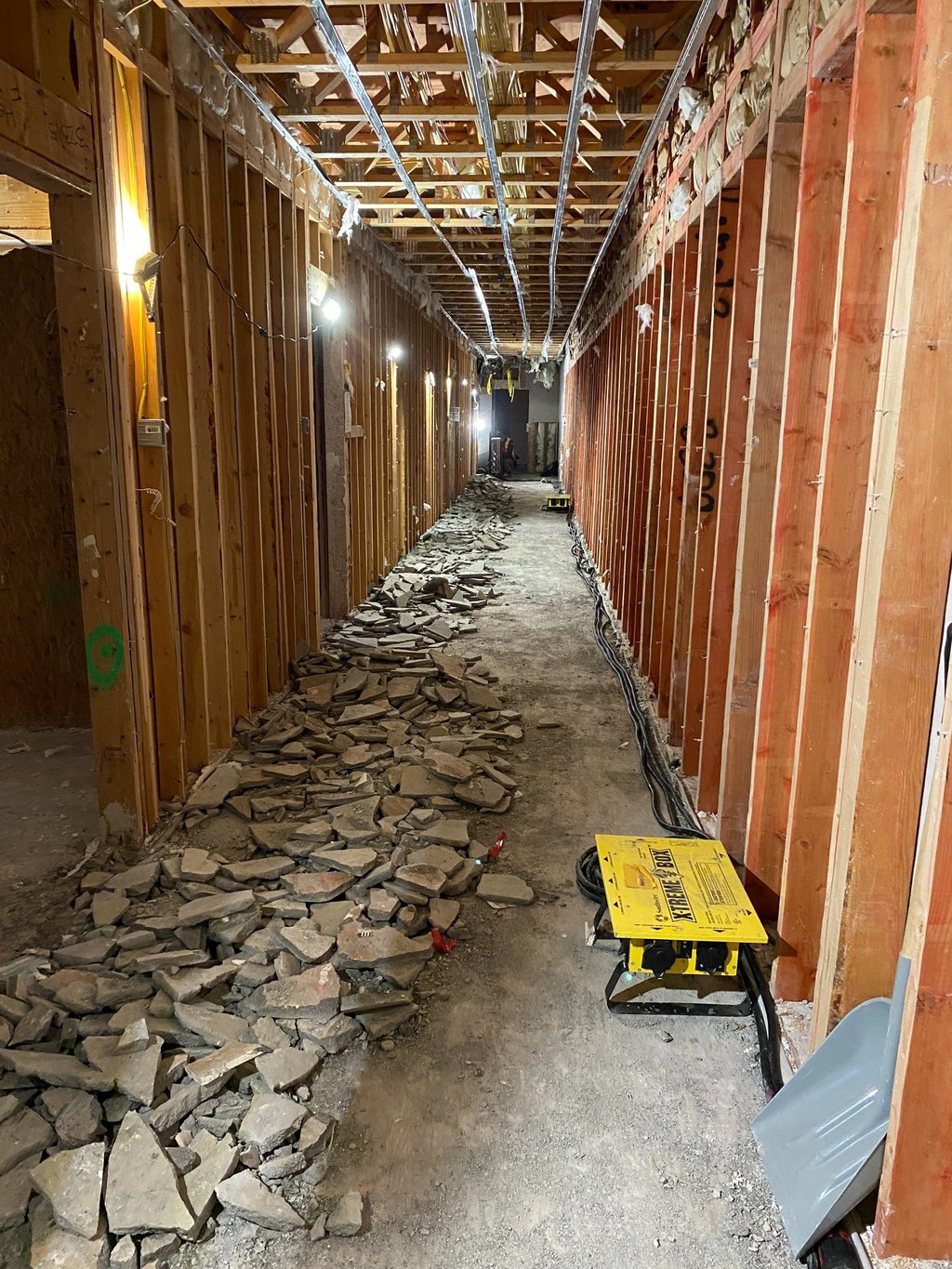
Respirable crystalline silica is present in many building materials restoration contractors disturb every day like tile, mortar, concrete, drywall, grout, masonry, and more. Cutting, grinding, drilling, chipping, sweeping, or breaking up these materials can release respirable crystalline silica dust. One can even argue that grinding and polishing natural stone is potentially creating respirable crystalline silica.
OSHA expects workers to understand the hazard before they perform tasks that generate dust. Training is part of the employer’s exposure control strategy, not an afterthought once dust is visible in the air.
Documentation should show that employees know which tasks create silica exposure, how the company controls dust, and when higher-risk activities require additional protective steps. On projects where demolition and reconstruction overlap, silica hazards can appear in multiple phases, and training must reflect that reality.
Hazard Communication (29 CFR 1910.1200)
Hazard communication touches nearly every restoration company because chemical products are used for cleaning, disinfecting, deodorizing, mold treatment, and other field operations. OSHA requires employers to train employees who are exposed to hazardous chemicals in their work area.
Training must occur “at the time of initial assignment” and whenever a new chemical hazard is introduced. Handing a technician a new product in the field and expecting them to figure it out is not compliant.
Documentation should show that employees know how to read labels, access Safety Data Sheets, and understand the hazards associated with the products they use including proper PPE. The written hazard communication program must be current, accessible, and aligned with the chemicals actually used in the place of business and in the field.
Training Triggers at a Glance
Asbestos (1926.1101): Disturbing suspect building materials regardless of age
Bloodborne Pathogens (1910.1030): Potential contact with blood or OPIM
Silica (1926.1153): Cutting, grinding, drilling, sweeping, or breaking silica-containing materials
Hazard Communication (1910.1200): Using or being exposed to hazardous chemicals
Leadership Takeaway
These four standards share a common thread: OSHA requires training before exposure, not after. Restoration work moves fast, but OSHA’s expectations do not change. If a hazard is present on day one, the training requirement is present on day one.
Companies that treat training as a strategic advantage not a checkbox are the ones that avoid citations, reduce risk, and build stronger, more capable teams. And if you’re not reviewing these four programs annually, you’re already behind.
This article covers only four OSHA training requirements. It does not include fall protection, respiratory protection, lockout/tagout, confined space, or other standards that may apply depending on the work performed. Contractors should review their safety plans and confirm they meet both federal OSHA requirements and any additional state-plan rules where they operate.
For restoration leaders, the responsibility is clear: your crew can only work as safely as you train them. Seek qualified trainers, verify your documentation, and make sure your teams are prepared before the work begins. That’s how you mobilize quickly, protect your team, your clients, and your business.
Craig Powers is a 40-year veteran of the cleaning and restoration industry and Owner of Ascent Restoration Solutions in Seattle, WA. He currently serves as IICRC 2nd Vice President and sits on the IICRC S-500 Consensus Body. Craig is a past member of the Restoration Industry Association (RIA) Board of Directors and currently serves on the RIA Education and Resources Committee. He holds the distinction of IICRC Triple Master and is RIA CLS & ERS certified.
As a technical trainer for the restoration and construction industry with a focus on safety, project management, and complex losses, Craig is an authorized OSHA trainer and American Red Cross trainer, working directly with companies to build defensible, compliance-ready safety programs.
Connect with Craig at Craig@ascentrestorationsolutions.com or on LinkedIn.